I awoke in the night shaky and hypo.More jelly babies and Hobnob biscuits.
Note to self-eat regularly.
Surprisingly, I felt fine in the morning.A bit stiff and not strong but functioning.
Breakfast consisted of a Greggs bacon sandwich cup of tea.Nicer than MacDonalds I decided.I was in no rush as my first destination was just down the road and didnt open until 10.Strange how blood sugar , light and a host of other things affect your mood.After a good ponder and another cup of tea I felt positively optimist for the day ahead.
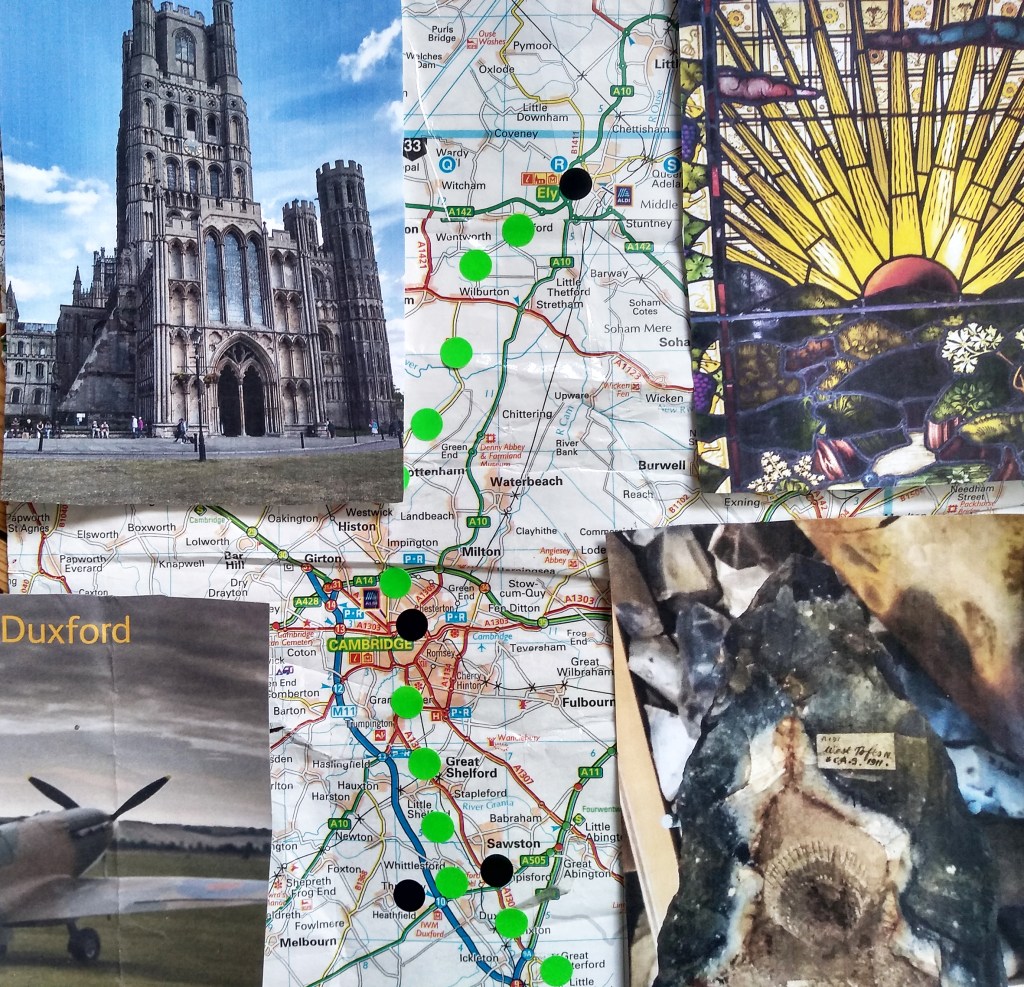
Having packed up I cycled 15 minutes down the road to the Imperial War Museum at Duxford aerodrome.I managed not to get lost with the help of the big map and lots of AA signs for Duxford aerodrome.I hesitantly joined the queue which seemed to consist of older ex-military types.I not a big fan of wars or aeroplanes so I think my hesitation was appropriate.
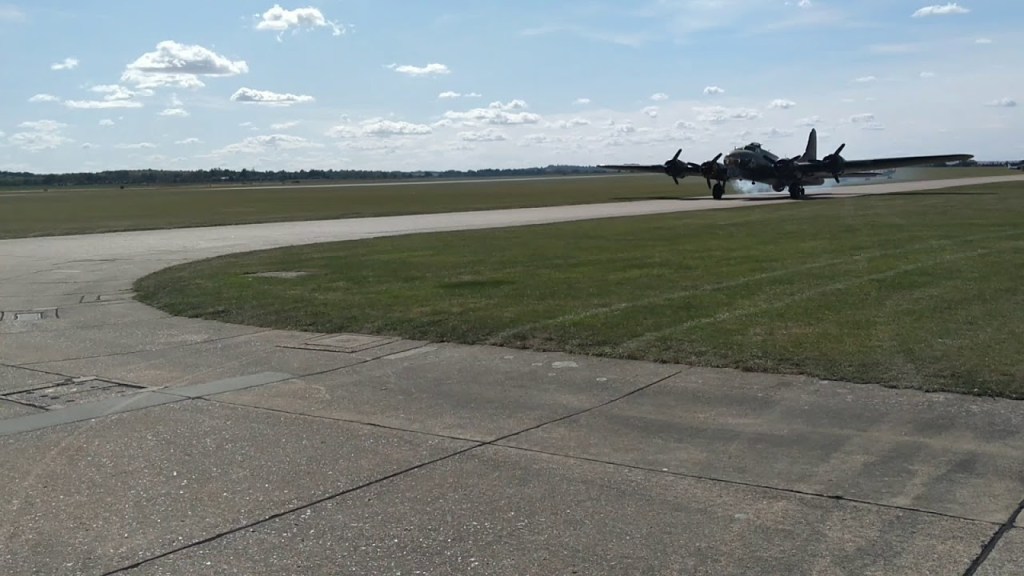
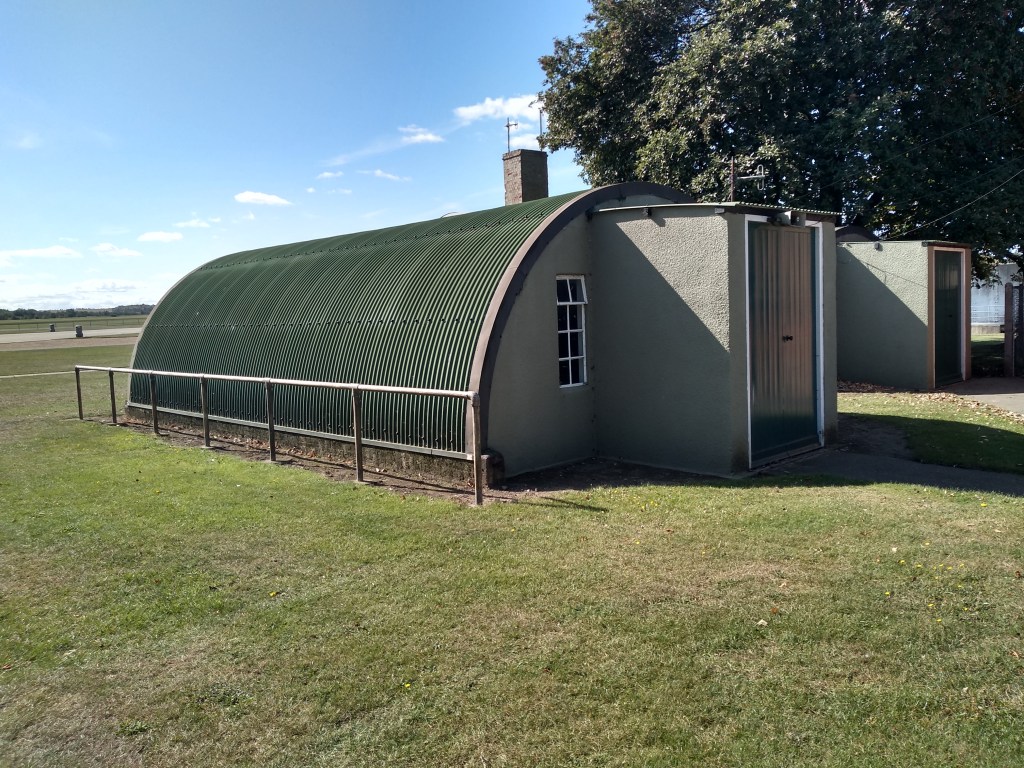
The visit did not disappoint.It was a glorious September morning.The aerodrome seemed oddly familiar with its old hangars and nissen huts.Old planes were scattered about .The sense of scene became like deja vu when an old flying fortress waddled in to land trailing smoke from one engine.I almost expected the crew to bail out onto the grass carrying their wounded.I felt positively scared with a knot of fear in my stomach just watching.
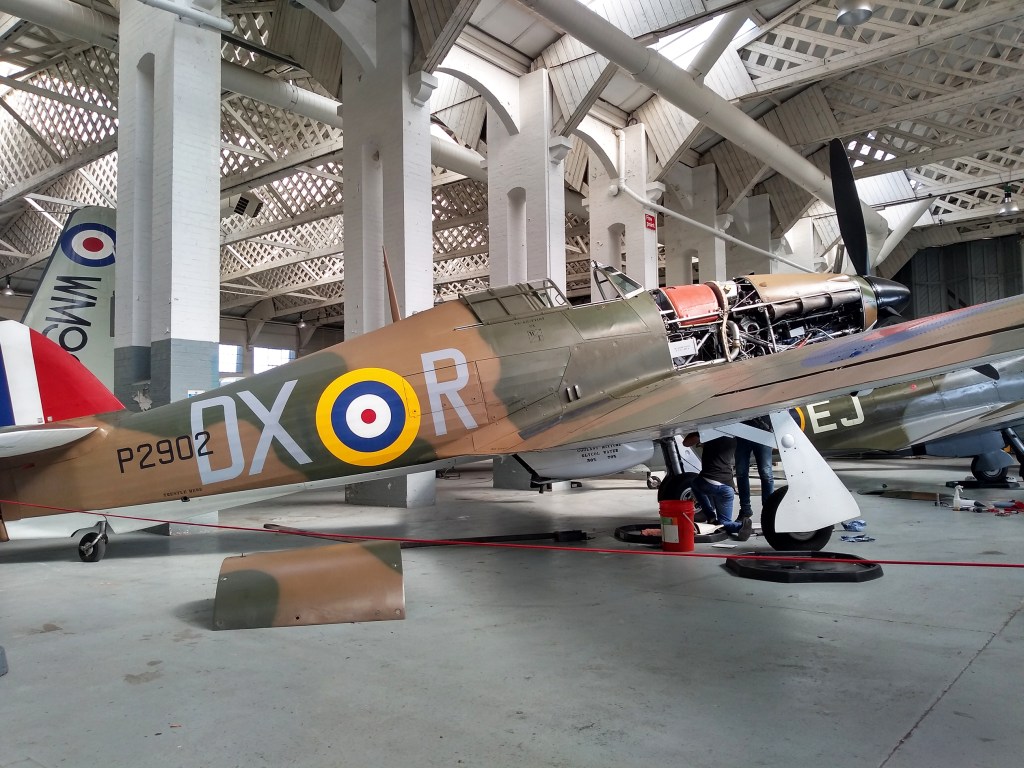
After tea and cake (keep that sugar coming),I set off to explore the hangars.It was still early and few people were about.You could just wonder into the working hangars following a cordoned off route.There were people taking things apart and more vintage planes than you could imagine.
In one hangar there was a video about the airfield.It was used in ww2 and after the war it was used as the set for the 1969 film the Battle of Britain.There was a very ironic commentary explaining that the film crew caused more damage to the airfield than the Luftwaffe ever did. During the filming they burned down one of the hangars and exploded all sorts of things in the grass for the action scenes.
No wonder it seemed so familiar, that film must have been one of the first I ever saw.My granddad Joe took me to see it at the Odeon at the Bullring in Birmingham.Granddad knew all the names of the planes because he spent half the war driving round Britain in a lorry picking up the wrecked bits of planes for salvage. Not a very savory job.
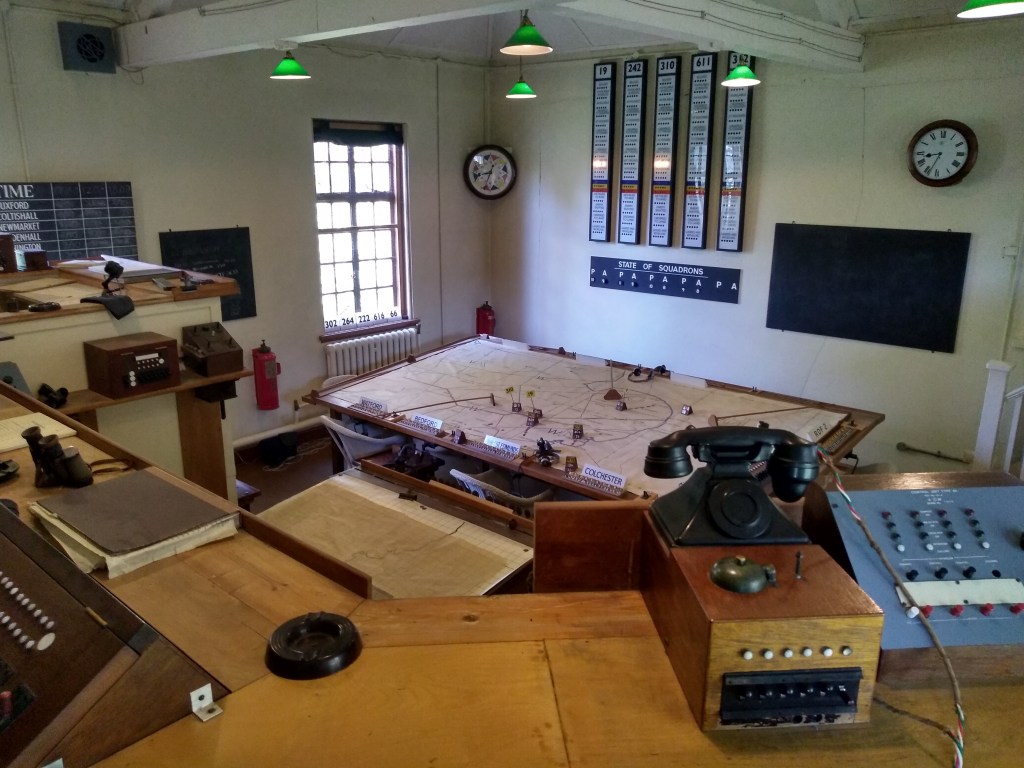
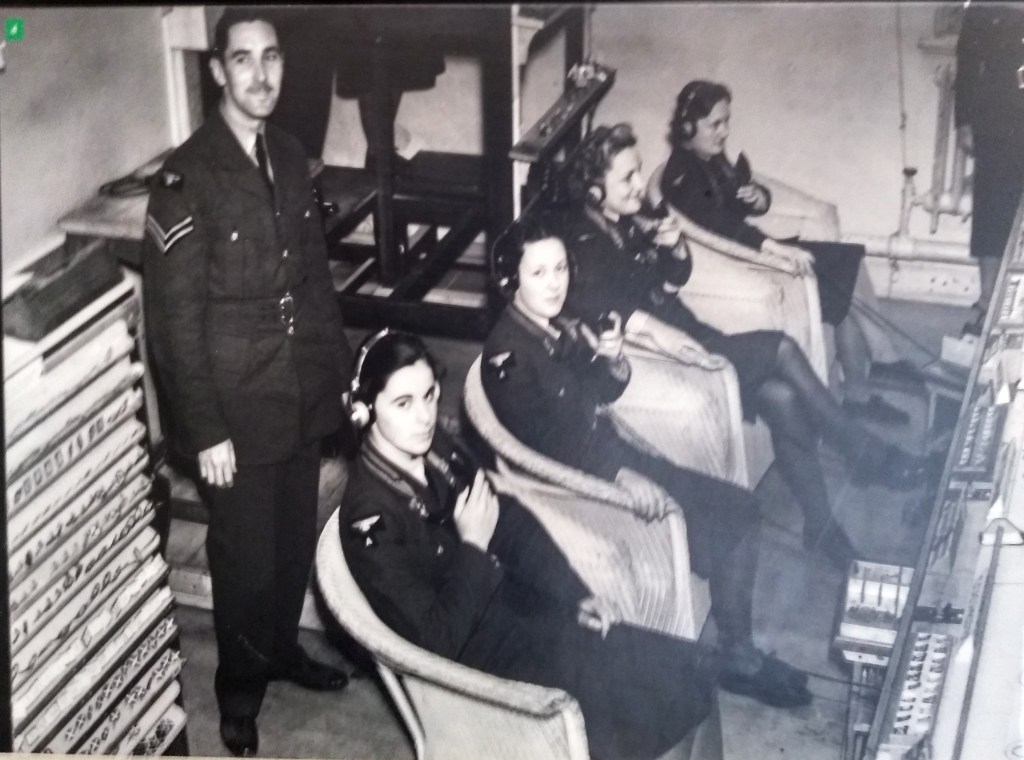
In another hut at Duxford was the preserved flight control room.There was a background tape of crackly radio messages and instructions to give it a real atmosphere of tension.They were staffed with men and women of the RAF.The bottom picture shows the 40s styleand wicker chair for seats.
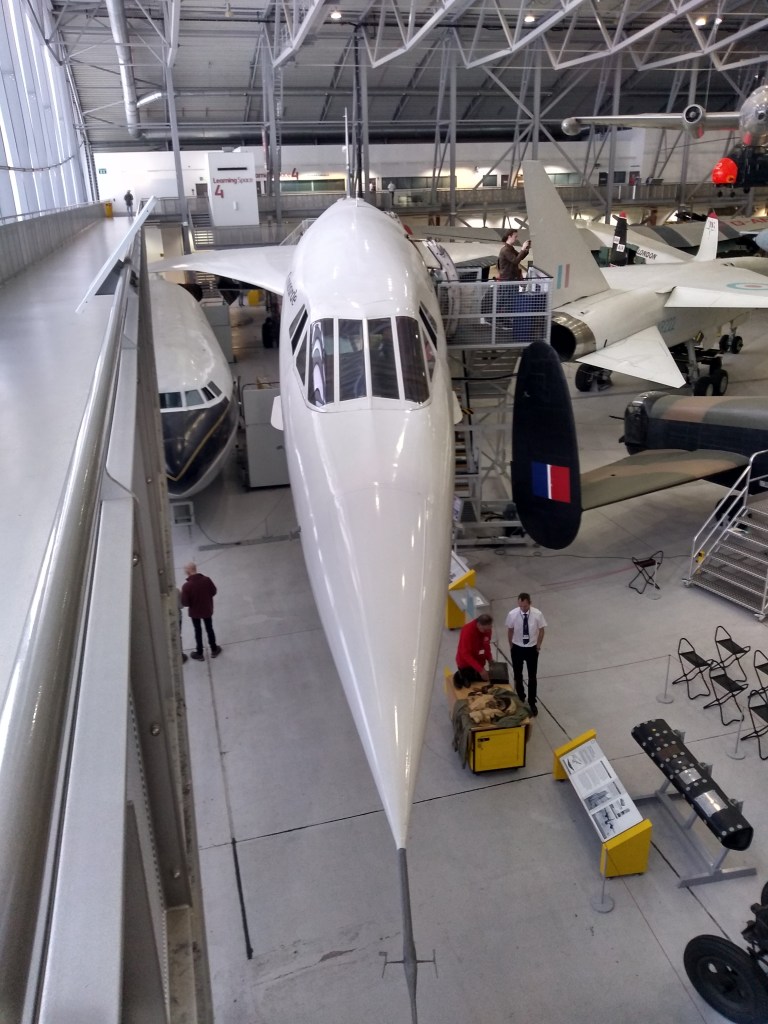
I visited the main modern hangar which houses Concorde, a Lancaster bomber and many other planes .Some were suspended spectacularly from the roof .The inside of Concorde was tiny compared with modern wide bodied jets.
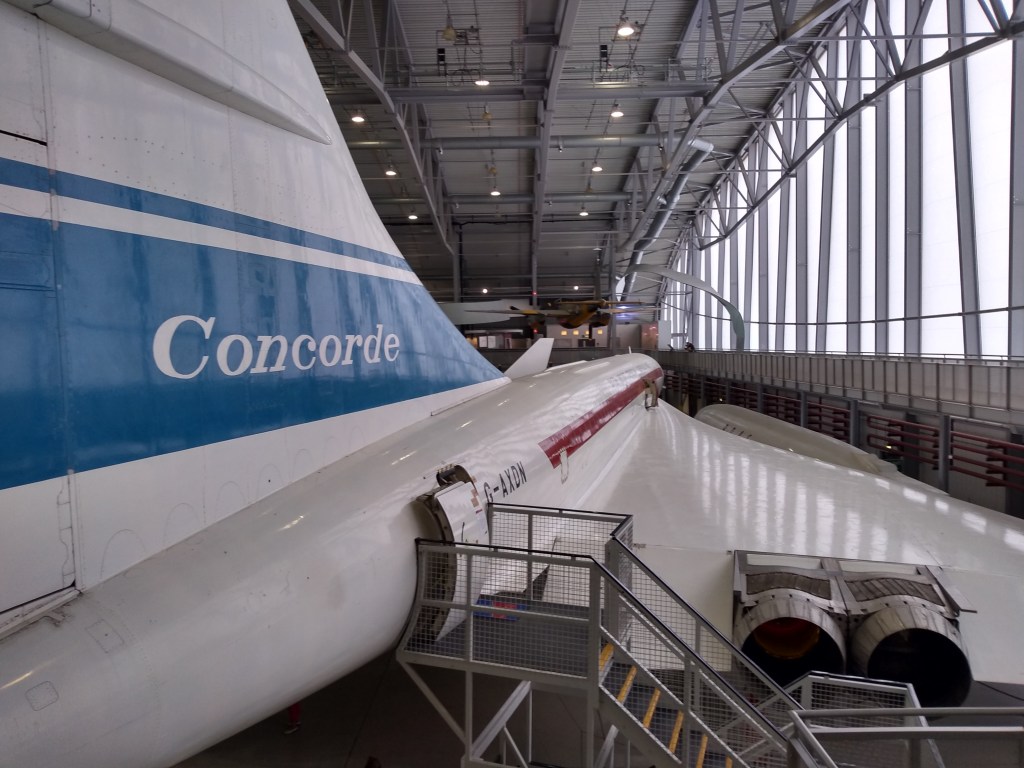
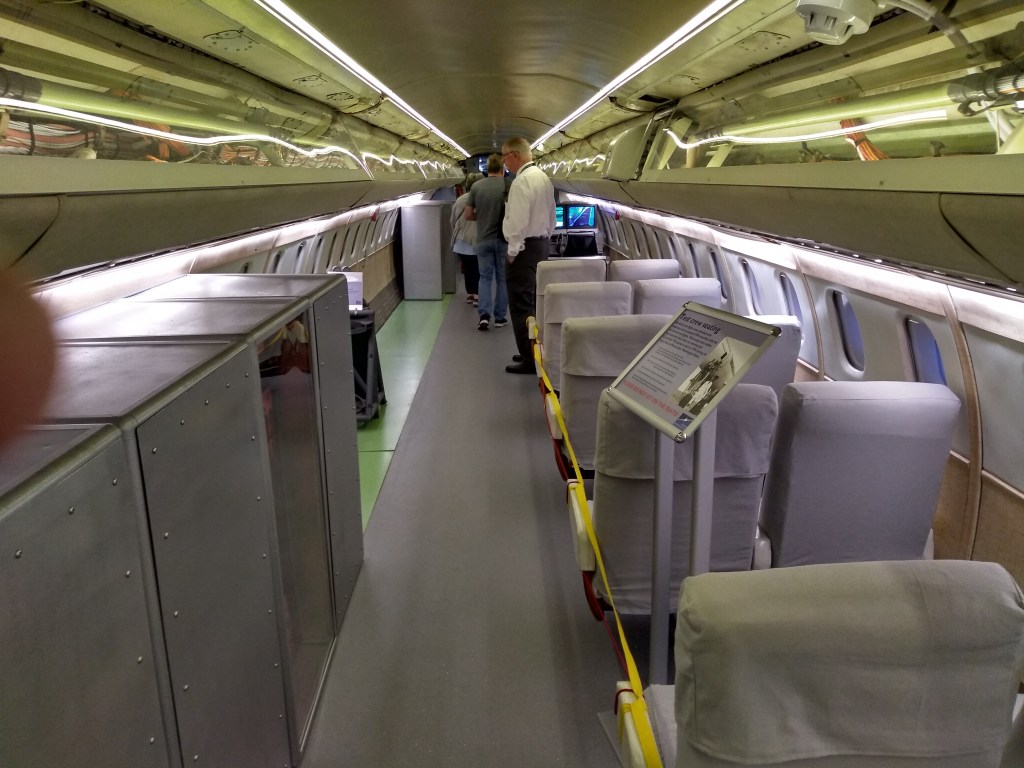
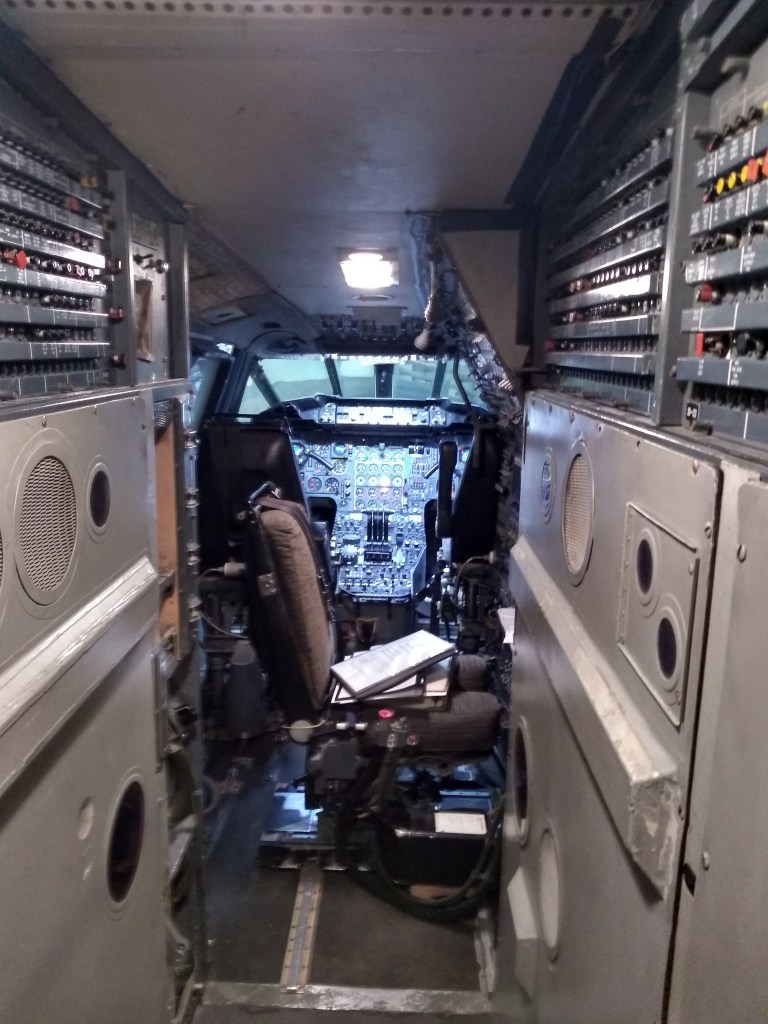
The was a guided tour of the Lancaster bomber so I signed up.The tour was full of facts and information most of which I cant remember but some of it stuck.I was struck by how huge the bomb bay was .The amount of explosives they could pack in was huge .Pity the people on the ground in mass bombing raids.The poor souls with terror raining down from the night sky.
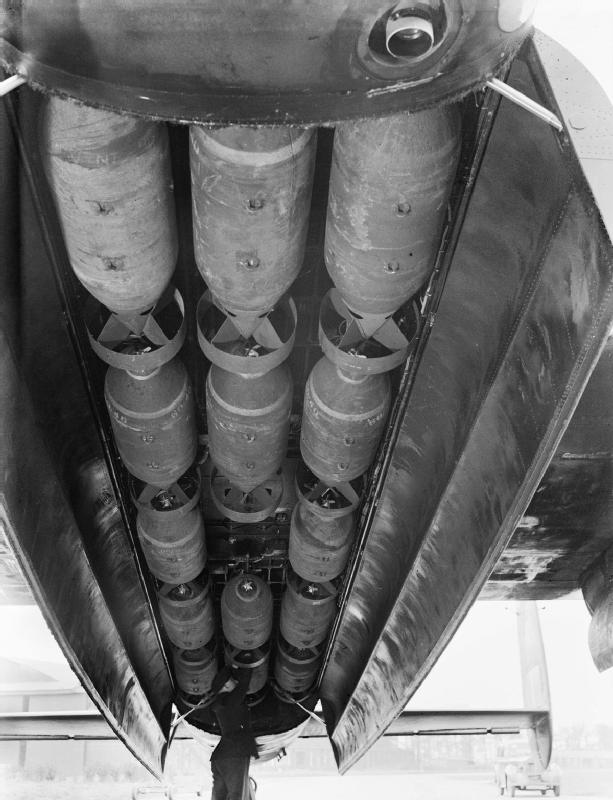
The Lancaster was designed to carry a bomb load as large as possible -up to 8000 lbs long range.To do that they had to have minimal armour.The adapted Lancasters for the Dambuster raids could carry about 20,000lbs but did away with the top gun turret and bomb doors.In comparison the more heavily armoured American B17 daylight bomber could carry 4,000lb long range but had many more guns and armour.
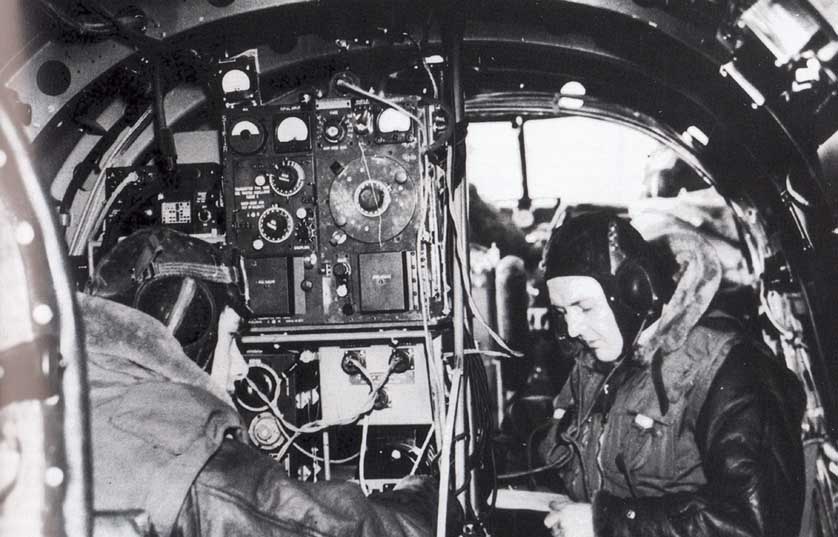
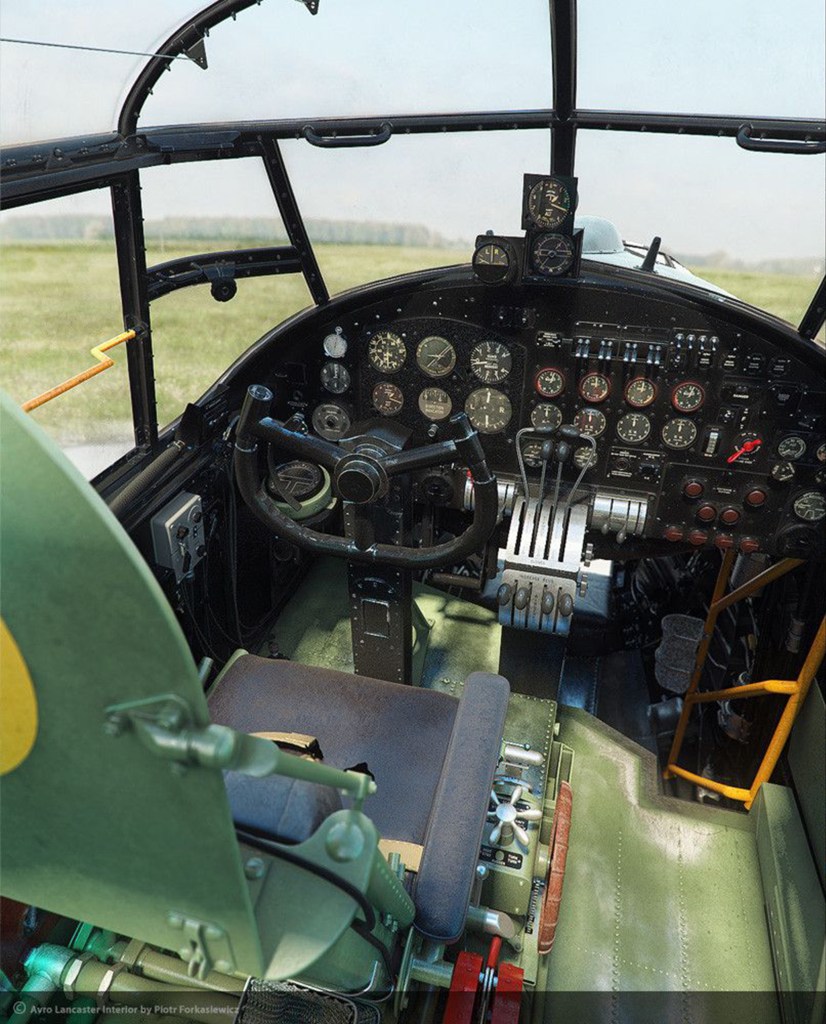
The Lancaster was apparently very reliable and manoeuvrable which is as well as that was its main defence. Little thought had been given to the well being of the crew.There is one entrance on the side-to bail out from there you would immediately hit the tail.The front escape hatch was at the bottom of the aircraft and you would hit the non- retractile rear wheel.For the rear gunner to bale out he had to open the hatch from his turret,put on his parachute(no room for it in the turret),then clamber back into the turret,shut the door, turn it all the way round,open the door and fall out.
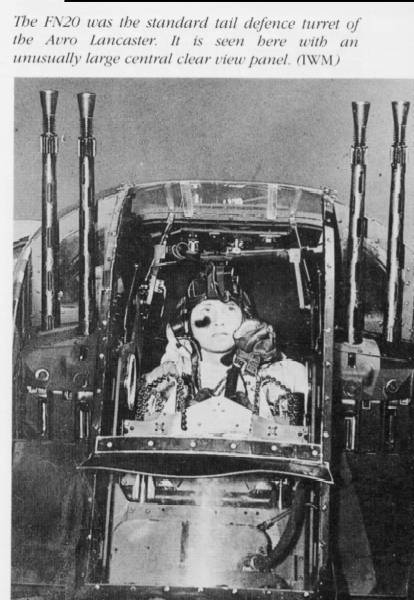
The only heating was a hot air jet from the engines to the pilots area.The other 6 crew literally froze at altitude at night.The only protective armour was an armoured plate behind the pilots seat.The guns were inadequate and were apparently only used as a last resort at close range(ie 150ft) where they were effective.They gave away the planes position and had minimal effect at longer range.The front top and rear gunners were effectively look outs to allow the pilot to take evasive manoeuvres. The rear gunners often removed the glass plate on their turret so they could see better.They would of course get even colder.
The crews and ground crews must have had a special relationship with the aircraft and each other,which would have been torn apart when a plane failed to return.
After a very informative morning, I pedalled off for Cambridge on the back roadspassing a delightful sign for a village called Shepreth Frog End.The delightful ,sunny, green country side had me thinking that the staff at the airbase must have travelled through the same benign,unchanging countryside each morning to their crazy airbase full of danger.The locals in Kent,Cambridgeshire and Lincolnshire must have found it even stranger in the 40s when their rural haven, where nothing much had happened for centuries, was suddenly transformed by numerous airfields , personnel ,planes and war.The contrast between the rural peace and ongoing war must have been hard to grasp.


 Wandering North